

![[object Object]](https://omo-oss-image.thefastimg.com/portal-saas/new2023080419495759710/cms/image/138ba837-b50d-4ff3-a73c-2e6a2379c522.jpg "[object Object]")
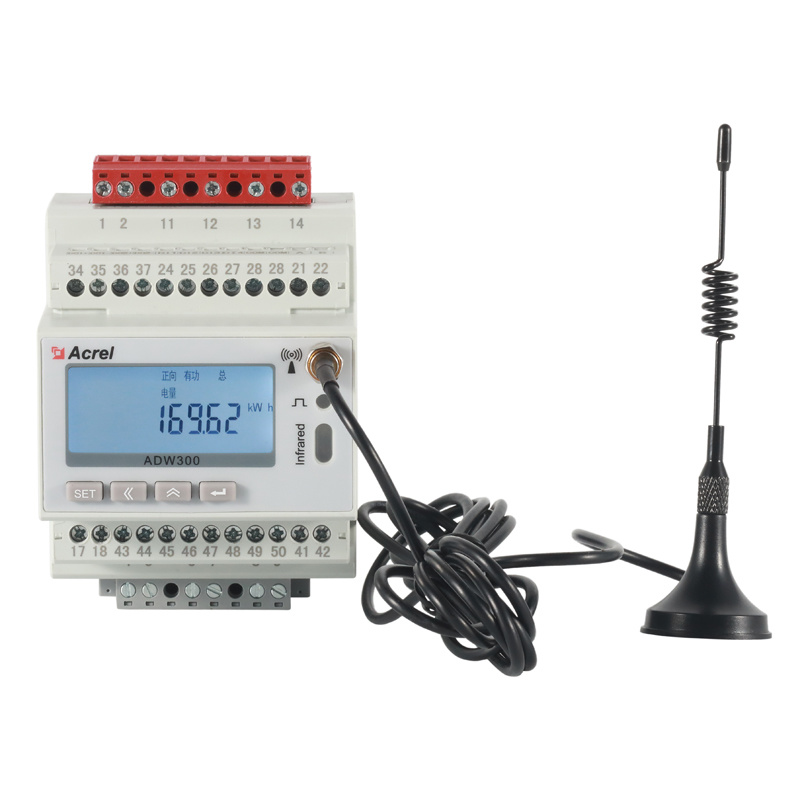


ADW300-WFHW CE IEC Approved Wireless WiFi Digital 3 Phase Energy Meter For IOT Platform Energy Consumption Monitoring
Series of products: Products
Series of products: Energy Management
Series of products: AC Energy Meters
Series of products: Three Phase Energy Meters
Series of products: Wireless Energy Meters
Series of products: Din Rail Installed Energy Meters
Series of products: Din Rail Installed AC Energy Meters



- Product Description
- Parameters
- Q&A
- Download
-
Overview
ADW300 wireless energy meters have multiple built-in communication modules designed for diffent situation when paired with IoT energy management system or other demand for remote connection. Meanwhile, ADW300 can provide various extration function module and various electrical parameters measurement to meet diffent requests from the customers. Also, as the prove for quality, ADW300 is strictly compliant of the standard of IEC 62052-11; IEC62053-22; LVD. Certificates are shown below.
Coding Rule

Dispaly

Function
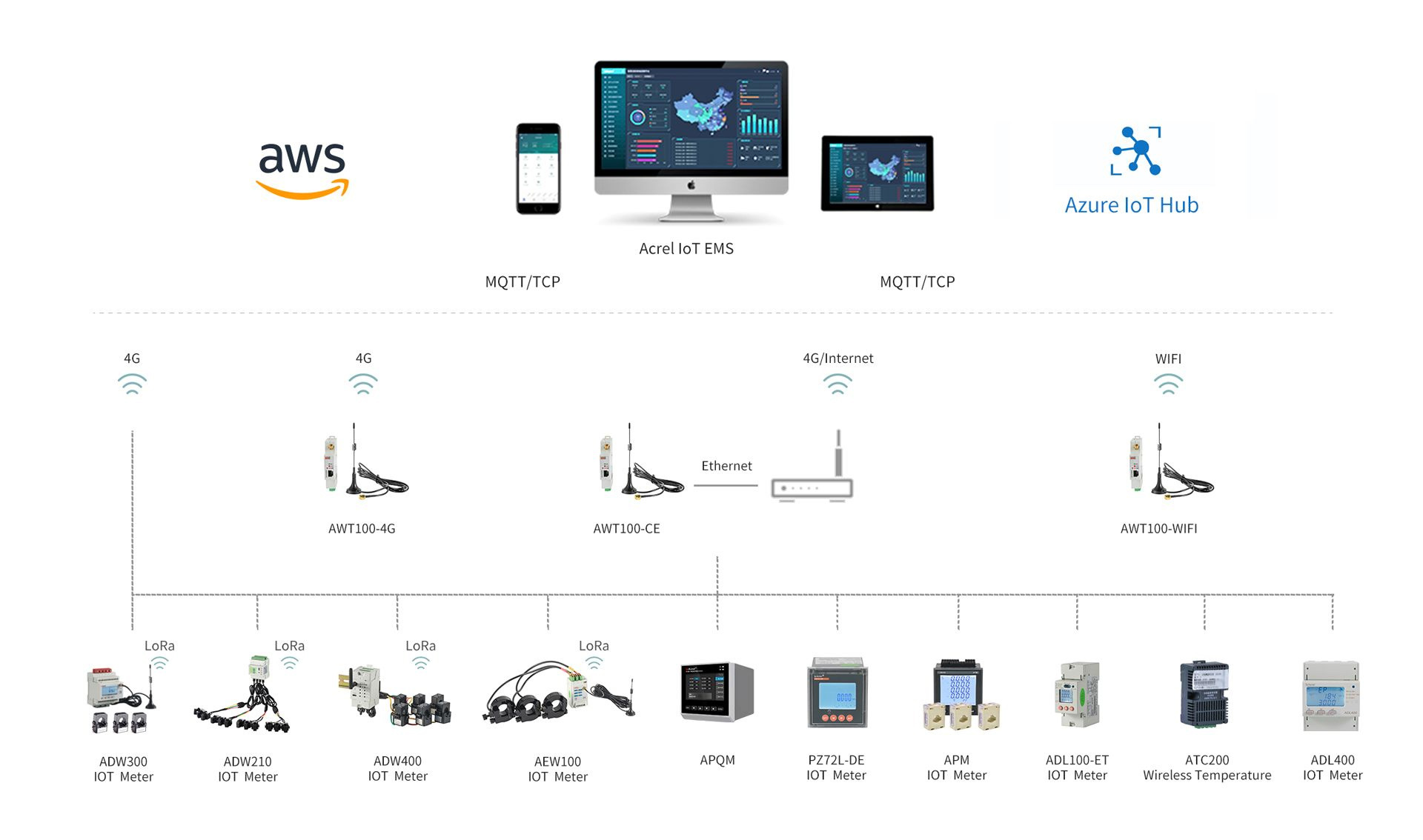
Communication Function
● WiFi
● 4G
● Lora
● Lorawan
● NB-IOT
● RS485(Modbus-RTU)
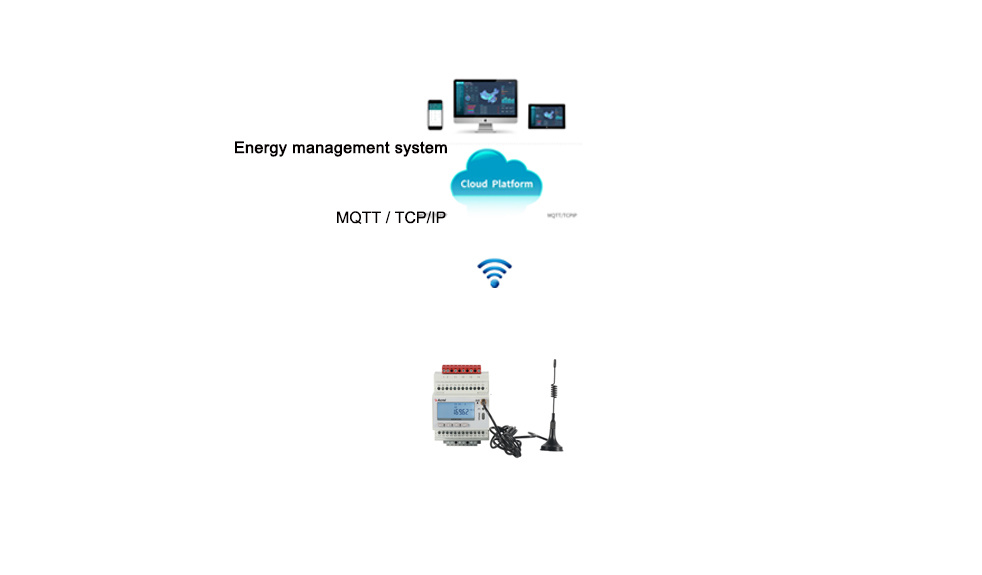
It can work with IOT Platform
Electricity Data Measurement
● kWh (positive and negative)
● kVarh (positive and negative)
● U, I, P, Q, S, PF, Hz, etc.
● Harmonic (THDv, 2-31st)
● 3-phase current & voltage imbalance
● Multi tariff
● Max demand, etc.
● 12 months' historical data
● 2 DO Digital Output
● 4 DI Digital Input
● Accuracy:Class 0.5S
● Measures temperature of A/B/C/N
● Measures 1 channel of leakage current
● Power outage alarm
● HMI Programming: Setting of CT/PT Ratio, Phase Wiring, Communication and etc
● Standard&Certificate: CE; IEC
Local Configuration
● Keypads HMI for Setting (CT/PT ratio, Wiring and etc)
● Setting through Adjustment Software
Network
Dimension

Wiring

Installation

FAQ
Q:What's the biggest advantage of ADW300?
A:ADW300 has its built-in wireless communication module which allow it to realize 4G LTE, WiFi, NB-IoT, LoRa upstream communication without using extra IoT gateways. For the application scenarios when the meters can't be of centralized installation, ADW300 will usually be the best option for monitor 3-phase circuits that were far from each other.
Q:How should I deal with RS485 network communication malfunction?
A:First, check if the wiring of RS485 communication line was loosen or wired incorrectly.(like reversely wiring the A,B terminal).
Next,inspect if the meter’s setting of address, baud rate, check bit was correct by using keypads on the meter.
Q:What if LoRa communication of meters malfunctioned?
A:First, use USB to RS485 serial converter to connect the meter with computer. Then use adjustment software to check if setting of meter is on consensus with the setting of master station.(setting of channel and spreading factor--SF)
If setting remain the same, then it might be due to large interference of work site or the excessively far range between meter and host. In that case, it’s recommended to use chuck antenna or set a new master station nearby.
Q:What’s the difference between ADW300 and ADW300W
A:ADW300 has internal current transformers and can select compatible current transformer according to the site current to realized a secondary connection via CTs.
ADW300W on the other hand, has external current transformers.(non-detachable or it will damage the meter) This kind of design extremely ease the wiring and installation if the work-site already has CTs.
Q:What do 3×57.7/100V,3×220/380V,3×380/660V,3×100V,3×380V,3×660V represent respectively?
A:The meter’s spec of 3*100V,3*57.7/100V is suitable for high voltage power system while pairing with PT(potential transformer or voltage transformer). Beside, 3*100V represent 3-phase 3-wire and 3*57.7/100V represent 3-phase 4-wire.
The meter’s spec of 3*220/380V,3*380/660V,3*380V,3*660V is suitable for low voltage power system(directly connect with meter). Meanwhile,3*380V,3*660V represent 3-phase 3-wire and 3*220/380V,3*380/660V represent 3-phase 4-wire.
Other Question? Please contact us and we will reply you as soon as possible.
Product Description:- PView
- high-performance
- requirements
-
Chart 1 Functions of ADW300
Functions
Description
Display mode
LCD
Energy metering
Active kWh (positive and negative),quadrant reactive power energy
Electrical measurement
U、I、 P、Q、S、PF、F
Harmonic function
THDv、Harmonic on 2nd-31st
Pulse output
Active pulse output
Three-phase unbalance degree
Voltage unbalance,current unbalance
Temperature measurement
Temperature of A/B/C/N(Optional T)
DI/DO
4DI,2DO(Optional K); 2DI,2DO(Optional U)
Aftercurrent
One-way aftercurrent(Optional L)
LED display
Pulse LED display
External current transformer
External open type current transformer
(Optional W)
Electrical parameter
Undervoltage, undercurrent, overcurrent, underload, etc
Communication
Infrared communication
RS485(Optional C)
Lora Wireless transmission
(Optional LR)
NB-IOT(Optional NB)
4G(Optional 4G)
Wifi(Optional WF)
Chart 2 Electrical performance of ADW300
Voltage input
Rated voltage
3×57.7/100V,3×220/380V,3×380/660V,3×100V, 3×380V,3×660V
Reference frequency
50Hz
Consumption
<0.5VA (Each phase)
Current input
Input current
3×1(6)A ;3×1(6)A(ADW300W), 3×20(100)A(ADW300W)
Start current
1‰ Ib (Class 0.5S),4‰ Ib (Class 1)
Consumption
<1VA (Each phase)
Auxiliary power
Power Supply
AC 85~265V
Power consumption
<2W
Measurement performance
Standard
IEC 62053-22:2003,IEC 62053-21:2003
Active energy accuracy
Class 0.5S(ADW300),Class 1(ADW300W)
Temperature accuracy
±2℃
Pulse
Width of pulse
80±20ms
Pulse constant
6400imp/kWh , 400imp/kWh
Chart 3 Work environment
Temperature range
Operating temperature
-20℃~55℃
Storage temperature
-40℃~70℃
Humidity
≤95% (No condensation)
Altitude
<2000m
-
Q:What's the biggest advantage of ADW300?
A:ADW300 has its built-in wireless communication module which allow it to realize 4G LTE, WiFi, NB-IoT, LoRa upstream communication without using extra IoT gateways. For the application scenarios when the meters can't be of centralized installation, ADW300 will usually be the best option for monitor 3-phase circuits that were far from each other.
Q:How should I deal with RS485 network communication malfunction?
A:First, check if the wiring of RS485 communication line was loosen or wired incorrectly.(like reversely wiring the A,B terminal).
Next,inspect if the meter’s setting of address, baud rate, check bit was correct by using keypads on the meter.
Q:What if LoRa communication of meters malfunctioned?
A:First, use USB to RS485 serial converter to connect the meter with computer. Then use adjustment software to check if setting of meter is on consensus with the setting of master station.(setting of channel and spreading factor--SF)
If setting remain the same, then it might be due to large interference of work site or the excessively far range between meter and host. In that case, it’s recommended to use chuck antenna or set a new master station nearby.
Q:What’s the difference between ADW300 and ADW300W
A:ADW300 has internal current transformers and can select compatible current transformer according to the site current to realized a secondary connection via CTs.
ADW300W on the other hand, has external current transformers.(non-detachable or it will damage the meter) This kind of design extremely ease the wiring and installation if the work-site already has CTs.
Q:What do 3×57.7/100V,3×220/380V,3×380/660V,3×100V,3×380V,3×660V represent respectively?
A:The meter’s spec of 3*100V,3*57.7/100V is suitable for high voltage power system while pairing with PT(potential transformer or voltage transformer). Beside, 3*100V represent 3-phase 3-wire and 3*57.7/100V represent 3-phase 4-wire.
The meter’s spec of 3*220/380V,3*380/660V,3*380V,3*660V is suitable for low voltage power system(directly connect with meter). Meanwhile,3*380V,3*660V represent 3-phase 3-wire and 3*220/380V,3*380/660V represent 3-phase 4-wire.
Other Question? Please contact us and we will reply you as soon as possible.
Related Products

Product inquiry
We will contact you within one working day. Please pay attention to your email.
Newsletter
Sign up our newsletter to get update news and article about company.